
Why Prompt Home Care Matters
Immediate first‑aid for dental trauma is critical because the mouth is a delicate environment where bleeding, inflammation, and bacterial invasion can quickly worsen an injury. By applying a cold compress for 10‑15 minutes, swelling and pain are reduced, while a warm salt‑water rinse helps cleanse the area and lower infection risk. These simple measures also give the patient comfort while waiting for professional care. The most time‑sensitive situation is an avulsed (knocked‑out) permanent tooth. Handling the tooth only by the crown, rinsing it gently, and either re‑inserting it into the socket or storing it in milk or saliva within 30 minutes dramatically increases the chance of successful re‑implantation. Prompt, correct home care stabilizes the tooth, preserves the viable ligament cells, and sets the stage for definitive dental treatment, ultimately saving the tooth and preventing long‑term complications.
Immediate Steps for the Most Common Dental Accidents
When a dental emergency strikes at home, quick, proper first‑aid can preserve tooth vitality, control bleeding, and reduce pain until professional care arrives.
Knocked‑out (avulsed) permanent tooth – Pick the tooth up by the crown only, rinse it briefly with warm water (no scrubbing), and try to re‑insert it into the socket. If re‑implantation isn’t possible, store the tooth in cold milk, saline, or the patient’s cheek to keep the periodontal ligament cells moist. Seek a dentist within 30 minutes for the best chance of survival.
Chipped or broken tooth – Rinse the mouth with warm water, locate any fragments, and keep them in a container of milk. Apply a cold compress to the cheek for 10‑15 minutes to lessen swelling, and cover sharp edges with dental wax or sugar‑free gum until you can be seen.
Lost filling or crown – Avoid chewing on that side. Use over‑the‑counter dental cement, temporary filling material, or sugar‑free chewing gum to seal the exposed tooth. Schedule a definitive repair promptly.
Soft‑tissue injuries (lips, gums, tongue) – Rinse gently with a warm salt‑water solution (½ tsp salt per 8 oz water). Apply firm pressure with sterile gauze to stop bleeding, then use a cold compress to reduce swelling.
FAQ
- What should I do if I have a dental emergency and no dentist? Call the nearest emergency dental clinic or urgent‑care center. For severe bleeding, intense pain, or a knocked‑out tooth, go directly to a hospital emergency department. While en route, rinse with warm water, apply a cold compress, take OTC pain relievers, and keep any displaced tooth or fragment moist in milk or saliva.
- What qualifies as a dental accident? Any unexpected injury to teeth, gums, jaw, or oral tissues caused by a sudden impact, slip, fall, or work‑related incident—such as a chipped, knocked‑out, or fractured tooth, soft‑tissue laceration, or jaw fracture—counts as a dental accident.
- What is the 3‑3‑3 rule for tooth infection? Take three 200 mg ibuprofen tablets (or equivalent acetaminophen) every three hours, not exceeding 600 mg per dose, for up to three days until a dentist can be consulted. This short‑term regimen helps control inflammation and pain.
Creating a Dental Emergency Kit
A well‑stocked dental emergency kit equips you to act quickly and preserve tooth vitality when accidents happen. Include sterile gauze to apply firm pressure and stop bleeding, a small airtight container (or a sealed cup) for storing an avulsed tooth, disposable gloves to keep the scene clean, and tweezers for locating fragments or retrieving a loose crown. Dental wax and over‑the‑counter temporary cement protect sharp edges and seal lost fillings or crowns until a dentist can intervene. For knocked‑out teeth, the kit should contain a storage medium such as cold milk, saline solution, or a vial of the patient’s own saliva; these solutions maintain the proper pH and protein balance to keep periodontal‑ligament cells viable. Each item serves a specific purpose: gauze controls hemorrhage, the container prevents the tooth from drying out, gloves reduce infection risk, tweezers aid safe retrieval, wax and cement prevent soft‑tissue irritation, and milk or saline preserve the tooth’s chances of successful re‑implantation.
Managing Pain and Swelling Safely
For immediate relief, over‑the‑counter NSAIDs such as ibuprofen (200‑400 mg every 6‑8 hours) are effective, and acetaminophen can be used as an alternative when ibuprofen is contraindicated. The 3‑3‑3 rule: a short‑term analgesic protocol: take three 200 mg ibuprofen tablets (or an equivalent acetaminophen dose) every three hours, never exceeding 600 mg per dose, and continue for no more than three days until professional care is obtained. This helps curb inflammation—the main driver of tooth pain. Apply a cold compress to the outside of the cheek for 10‑15 minutes, then pause and repeat as needed to reduce swelling. Rinse the mouth with warm salt water (½ tsp salt in 8 oz warm water) several times daily to cleanse soft‑tissue injuries and lower bacterial load. Protect any jagged tooth edges with dental wax or a piece of sugar‑free chewing gum until you can see a dentist.
What is the 3-3-3 rule for tooth infection?
The 3-3-3 rule is a short‑term analgesic and anti‑inflammatory protocol often used for dental pain. It recommends taking three 200 mg ibuprofen tablets (or an equivalent dose of acetaminophen if ibuprofen is contraindicated) every three hours, not exceeding a total of 600 mg per dose, and continuing for no more than three days until you can see a dentist. This helps reduce inflammation, which is the primary cause of most tooth pain.
When to Seek Professional Help
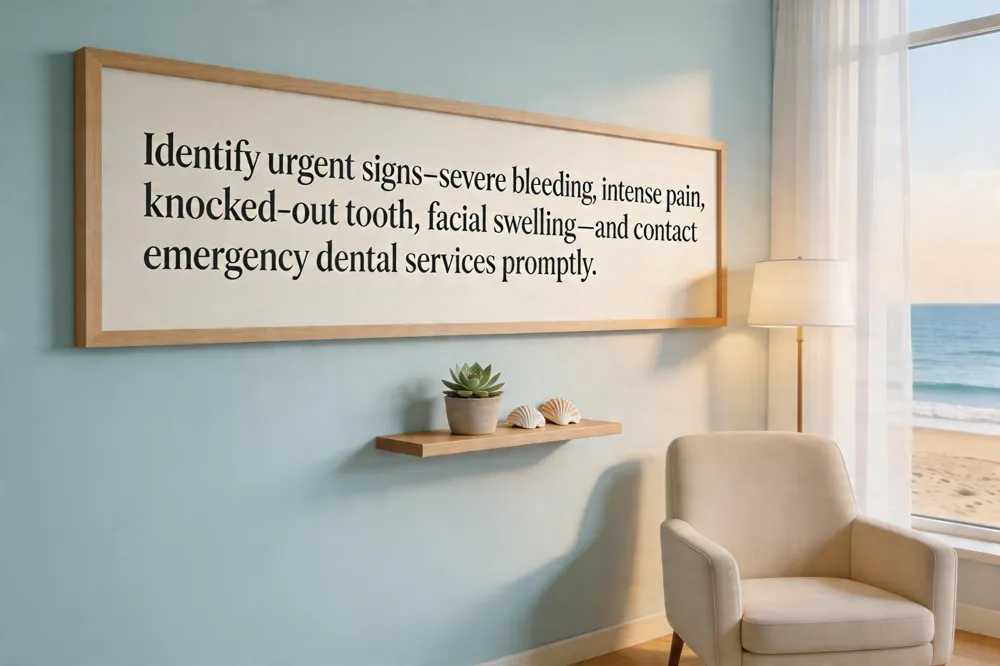
If you can’t reach your regular dentist, call the nearest emergency dental clinic or urgent‑care center right away for guidance. For severe bleeding, intense pain, a knocked‑out tooth, or facial swelling, go directly to the emergency department of a hospital. While you’re on your way, rinse your mouth gently with warm water, apply a cold compress to reduce swelling, and take over‑the‑counter pain medication if needed. Keep any displaced tooth or tooth fragment moist—place it in milk, saline, or your cheek—but avoid touching the root. Schedule a follow‑up appointment with a dentist as soon as possible to complete definitive treatment.
Prevention: Reducing Future Dental Accidents
A dental accident is any injury or trauma to the teeth, gums, jaw, or surrounding oral tissues that results from an unexpected event or work‑related incident. It includes sudden impacts such as a blow from a tool or falling object, slips, trips, and falls that cause a tooth to chip, crack, or be knocked out, and injuries that lead to jaw dislocation, fractures, or soft‑tissue damage.
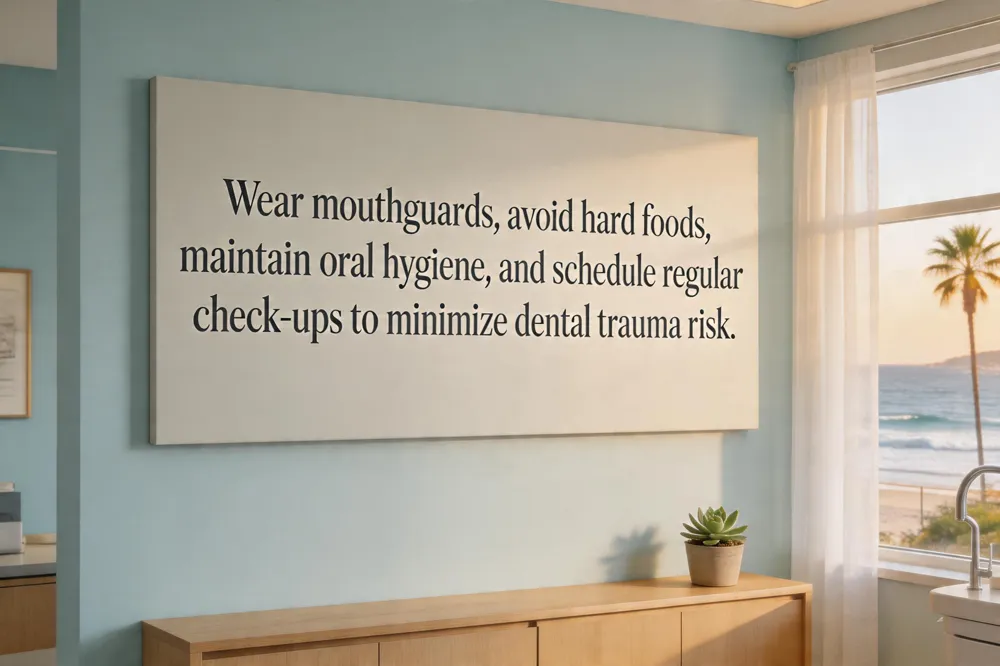
To lower the risk of such emergencies, wear a custom‑fitted mouthguard during sports and any high‑impact activities; this simple barrier absorbs force and protects both hard and soft tissues. Schedule regular six‑month dental check‑ups and cleanings at Laguna Beach Dental Arts, where AI‑assisted imaging can spot vulnerable teeth before they break. Avoid chewing hard objects like ice, pens, or popcorn kernels, and maintain good oral hygiene—brush twice daily with fluoride toothpaste and floss each day—to keep enamel strong and gums healthy. Finally, patient education and the practice’s digital diagnostics empower patients to recognize early warning signs and take proactive steps toward lasting oral health.
Your Path to a Healthy, Confident Smile
When a dental emergency strikes, act quickly: rinse any chipped or broken tooth with warm water, control bleeding with gauze, apply a cold compress for 15 minutes, and use over‑the‑counter ibuprofen (200‑400 mg every 6‑8 hours) for pain. For a knocked‑out permanent tooth, handle it by the crown, rinse gently, and re‑insert it if possible; otherwise store it moist in milk, saline, or saliva and seek care within 30 minutes. A well‑stocked emergency kit—containing gauze, a small sealed container for the tooth, dental wax, temporary cement, pain relievers, and a salt‑water solution—can preserve tissue and reduce discomfort until professional help arrives. Laguna Beach Dental Arts offers same‑day appointments and employs AI‑assisted imaging and digital diagnostics to assess trauma swiftly and plan precise treatment. Finally, schedule regular six‑month check‑ups and cleanings to detect problems early, reinforcing prevention and keeping your smile confident and resilient.