
The Evolution of Modern Dentistry in Laguna Beach
Modern dentistry is shifting away from archaic, film-based methods toward streamlined digital workflows that prioritize both diagnostic precision and patient comfort. While traditional practices often relied on time-consuming chemical development and bulky physical molds, current standards integrate advanced imaging to create a faster, more transparent experience. At Laguna Beach Dental Arts, this technological integration is a core strategy, ensuring patients benefit from modern diagnostic tools that allow for clearer visual communication and highly individualized care.
This transition is not merely about efficiency but about fundamentally improving clinical outcomes. According to the Cleveland Clinic, digital systems can reduce radiation exposure by up to 90% compared to legacy film methods. By replacing guess-work with high-resolution digital data, modern practitioners can identify pathologies earlier and plan restorative treatments with greater confidence. Practices like Laguna Beach Dental Arts emphasize this technological approach to demystify oral health, helping patients visualize their specific needs through digital diagnostics rather than relying on abstract explanations.
The long-term impact of these tools is a more predictable path to oral wellness. As noted by NIH research, the move toward digitized, comprehensive treatment planning helps reduce the frequency of repeat appointments while improving the accuracy of complex procedures. By focusing on these innovations, modern dental providers in Laguna Beach can offer a higher standard of care that is both safe and tailored to the unique anatomy of each patient.
The Transformative Benefits of Modern Dental Technology

Modern dental technology has fundamentally transformed oral care, making procedures safer, more efficient, and significantly more comfortable. By utilizing advanced diagnostics, such as digital X-rays and 3D imaging, providers can achieve higher levels of clinical precision. This allows for the early detection and treatment of pathology before conditions become severe, often necessitating less invasive intervention.
What are the primary benefits of modern dental technology for patients?
Technology empowers patients to take an active, confident role in their health by replacing abstract explanations with tangible visual evidence. At Laguna Beach Dental Arts, the integration of AI-assisted imaging provides a clear, high-resolution view of oral structures. When patients see their own diagnostic data firsthand, they can better understand their specific health needs and the necessity of recommended treatments.
Efficiency is another hallmark of these innovations. Traditional film-based processes required chemical development and long wait times, but digital workflows allow for instant image viewing on monitors in the treatment room. This reduction in chairside waiting times is a major improvement over older practices that rely on external processing. By prioritizing advanced digital diagnostics, practitioners deliver a more seamless experience that minimizes total time spent in the office while maximizing the quality of personalized care.
Revolutionizing Diagnostics with Digital Radiography
Digital radiography has replaced traditional silver-oxide film with electronic sensors, a change that provides immediate clinical data at the chairside. By eliminating the chemical developing process, these systems offer a faster, cleaner, and more efficient diagnostic workflow. Crucially, digital dental X-rays reduce patient radiation exposure by 80% to 90% compared to legacy film-based methods.
At Laguna Beach Dental Arts, high-resolution sensors allow for real-time image display on treatment room monitors. This instant feedback loop serves as a valuable tool for patient education, as it enables individuals to view their own oral health status alongside the dentist. Unlike conventional 2D radiographs that may suffer from structural superimposition, modern digital sensors and advanced imaging technologies provide the clarity required to uncover hidden issues such as hairline fractures, bone loss, or deep infections.
Beyond basic 2D imaging, this field now incorporates powerful 3D solutions. While standard imaging remains a foundational diagnostic step, specialized tools like Cone Beam Computed Tomography (CBCT) allow our team to map complex anatomical structures in three dimensions. This precision is essential for site-specific treatment planning, such as evaluating bone density for dental implants. By aligning high-resolution 2D data with 3D modeling, modern practices ensure that every diagnostic finding leads to a safer and more predictable patient outcome.
Navigating the Future with 3D Scanning and Modeling
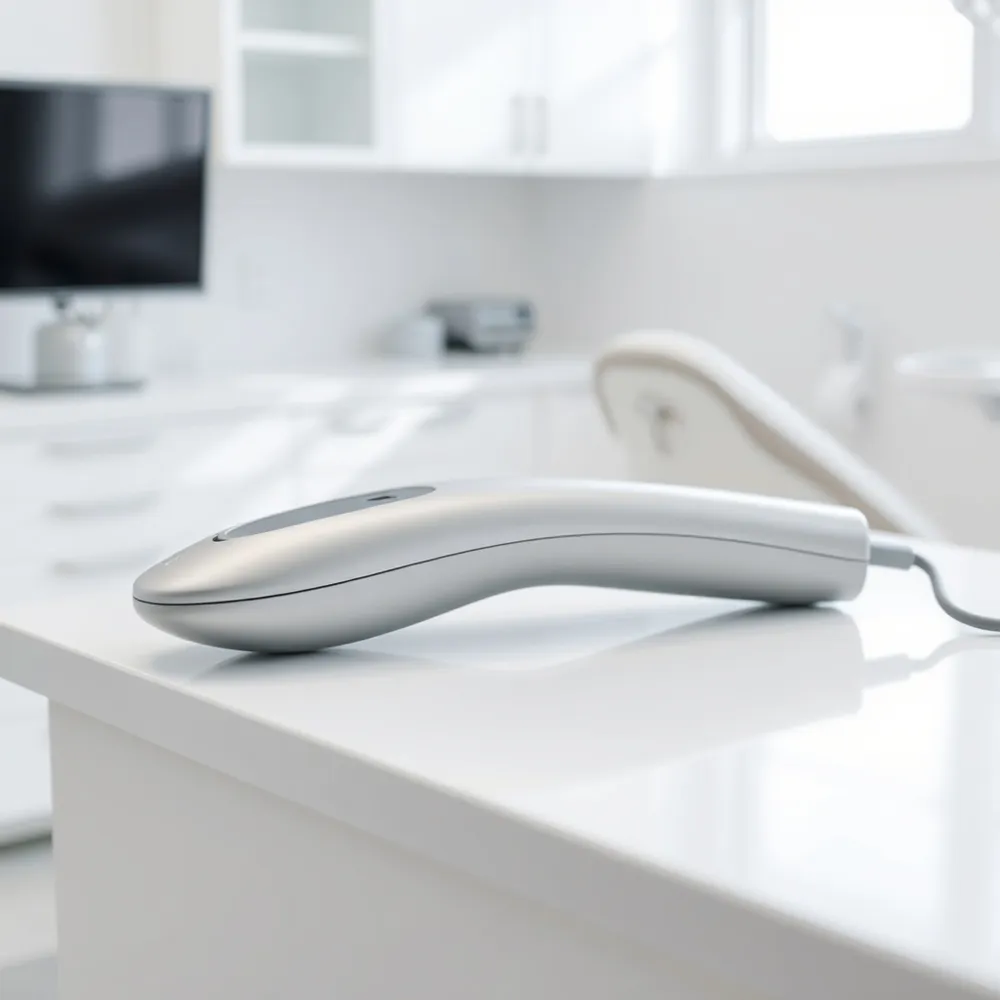
The evolution of diagnostic tools has moved away from traditional physical impressions toward high-speed digital workflows. While older clinics still rely on messy, time-consuming molds that often trigger discomfort or gag reflexes, Laguna Beach Dental Arts replaces these analog inconveniences with precise intraoral scanning technology.
How do dental 3D scanners and digital models work?
Dental 3D scanners are handheld devices that use advanced optical technology to capture thousands of high-speed images of the teeth and gums. As the dentist moves the scanner over the oral cavity, the device instantly collects precise spatial data, which sophisticated software pieces together in real-time. This process creates a highly accurate, interactive 3D digital model of the patient’s dental anatomy, replacing the need for traditional, messy impression materials. These digital models serve as a foundational map, allowing for the rapid, precise fabrication of crowns, clear aligners, and other custom dental appliances. By integrating this technology, our practice ensures a more comfortable, efficient, and technologically advanced experience for every patient.
This digitized approach captures dimensions with accuracy down to the tenth of a millimeter. Because these electronic files are easily transmitted to labs, restorative planning for bridges or implant crowns becomes significantly more efficient than shipping physical plaster models. By prioritizing these digital diagnostics, modern practices can eliminate the structural limitations of 2D imaging, which may often obscure the true orientation or density of oral structures per recent NIH research.
Prioritizing Comfort Through Advanced Clinical Innovations
Modern dental technology has fundamentally transformed the patient experience by prioritizing both physical comfort and psychological ease. Innovations such as laser dentistry allow for precise, minimally invasive treatments that significantly reduce pain, bleeding, and swelling while promoting faster healing compared to traditional mechanical tools.
At Laguna Beach Dental Arts, we enhance this commitment to patient well-being by replacing traditional, cumbersome impression materials with 3D intraoral scanning. This shift eliminates the discomfort of physical molds and gag reflex triggers, which are common barriers in conventional dental offices. Similar to specialized centers using digital diagnostics to improve patient education, we utilize these tools to provide a transparent look at your oral health, helping to demystify complex procedures and reduce common anxieties.
Beyond physical tools, modern workflows focus on streamlining your time in the chair. By integrating advanced restorative technologies, we can often complete procedures in a single visit, decreasing the need for temporary restorations or multiple appointments. These innovations, combined with a supportive environment, ensure that clinical excellence never comes at the expense of your peace of mind.
| Innovation | Primary Benefit | Comfort Impact |
|---|---|---|
| Laser Dentistry | Soft tissue precision | Reduced anesthesia needs |
| 3D Intraoral Scanning | High-accuracy modeling | Eliminates messy impressions |
| Digital Diagnostics | Instant imaging | Less chair time |
Emerging Technologies Defining Modern Dentistry
The dental industry is currently being transformed by the deep integration of artificial intelligence, which now assists in everything from automated reception tasks to advanced diagnostic imaging that detects pathologies with extraordinary precision. By incorporating AI-assisted imaging, clinics can identify issues often obscured in standard 2D formats. This technology effectively streamlines practice operations, allowing clinicians more time to focus on personalized patient care at Laguna Beach Dental Arts.
What are the latest dental technologies currently transforming the industry?
Innovations in 3D printing have reached a significant milestone, allowing for the rapid, in-office production of durable restorations like crowns and bridges. While some practices still rely on traditional lab shipments, Laguna Beach Dental Arts leverages digital workflows to ensure higher accuracy and reduced wait times. Furthermore, new thermoplastic materials are enabling the creation of custom-printed clear aligners that adjust for comfort and movement. These advancements in CBCT and digital modeling expand the dentist’s clinical field of view, though the essential human elements of empathy, judgement, and communication remain at the heart of care.
| Technology | Clinical Benefit | Operational Impact |
|---|---|---|
| AI Imaging | Higher detection rates | Faster diagnostics |
| 3D Printing | Custom restorations | Reduced cycle time |
| Thermoplastics | Enhanced comfort fit | Fewer chair adjustments |
Considerations and Potential Limitations of Digital Imaging
While modern dental X-rays significantly reduce radiation exposure and enhance diagnostic precision, integrating these systems involves specific operational trade-offs compared to legacy methods. Laguna Beach Dental Arts manages these nuances by pairing advanced imaging technology with a patient-centered approach that prioritizes comfort during every sensor placement.
Are there any notable drawbacks to digital dental imaging?
Direct digital sensors are typically more rigid and thicker than traditional film packets. This physical profile can cause discomfort, particularly for patients with a sensitive gag reflex or when capturing images in restricted areas of the mouth. To mitigate this at Laguna Beach Dental Arts, staff use precise sensor positioning techniques that often minimize chair time and reflexive responses compared to less specialized dental offices.
The transition to high-tech imaging also requires significant upfront capital for sensors and specialized software. Unlike standard analog film that lacks electronic complexity, digital sensors are delicate hardware components that incur repair or replacement costs if damaged. Furthermore, because these digital sensors come in fixed, sometimes smaller dimensions, capturing wide anatomical regions might occasionally necessitate multiple exposures, though the resulting diagnostic clarity usually justifies the process.
A Commitment to Excellence in Patient Care
Modern dental care at Laguna Beach Dental Arts focuses on blending clinical precision with a truly patient-centered environment. Integrating advanced diagnostic digital X-rays and imaging tools ensures that every treatment plan is tailored to the individual, rather than relying on generalized approaches found in legacy practices.
Technology acts as a bridge for transparency, allowing you to visualize your oral health alongside our team. By viewing real-time data on treatment room monitors, you become an active participant in your own care, fostering trust that persists even in a digital-first transition. This high-tech foundation supports, rather than replaces, the human-to-human relationship that defines high-quality dentistry.